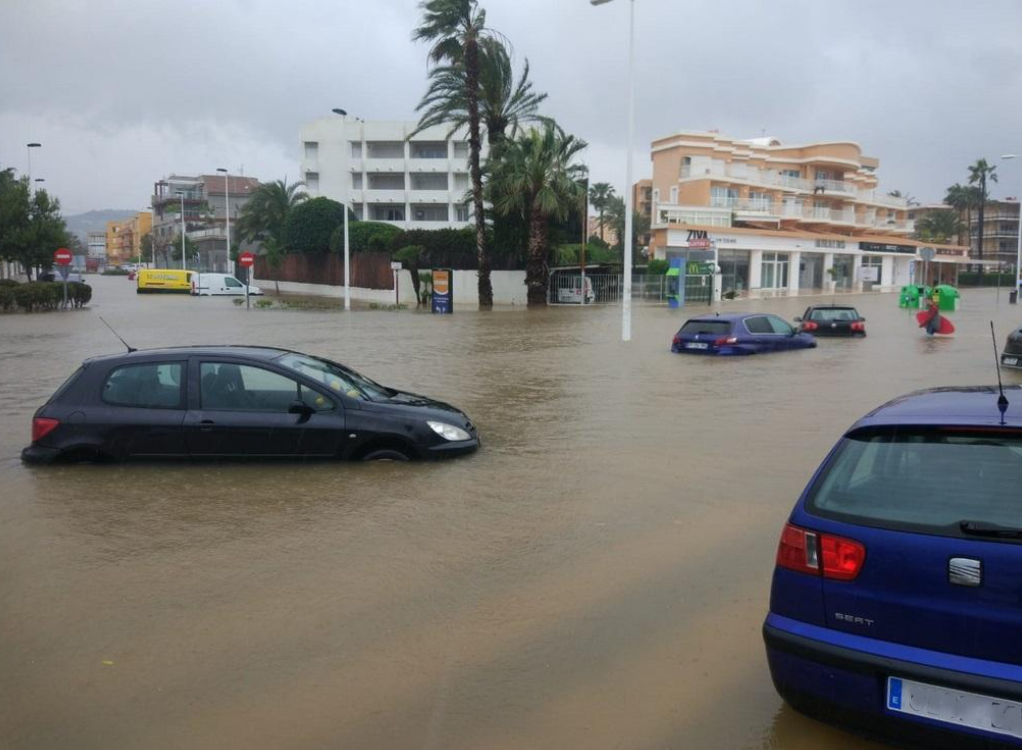
Heavy Rain and Flooding on the Costa Blanca North: What Residents and Property Buyers Need to Know
Living on the Costa Blanca North means enjoying beautiful beaches, a Mediterranean climate and plenty of sunshine. But our climate has another side that is important to understand, particularly if you have moved here from a country where heavy rainfall is less intense.
When torrential rain arrives, conditions can change very quickly. Knowing the risks can make all the difference.
Why can heavy rain be so dangerous here?
1. Torrential rain can overwhelm drainage systems
Mediterranean storms can bring large amounts of rain in a very short period. When this happens, drainage systems may struggle to cope, and water can accumulate rapidly on roads, in streets and around properties.
The danger is not simply how much rain falls over a whole day, but how much falls within a short period and where it falls.
2. Dry barrancos can become dangerous torrents
Across the Costa Blanca North, natural watercourses known as barrancos are a familiar part of the landscape. For much of the year, some appear completely dry.
However, during heavy rainfall, these channels can fill rapidly with fast-moving water. Rain falling inland can also cause water levels to rise further downstream, even when there is little rain where you are.
Never walk or drive through a flooded barranco. The depth and strength of the current can be difficult to judge, and conditions can change within minutes.
3. Roads can become dangerous very quickly
Low-lying roads, underpasses, areas close to watercourses and poorly drained streets can be particularly vulnerable to flooding.
Even a relatively shallow flow of water can affect a vehicle's stability, while deeper water can sweep vehicles away. A road that was perfectly passable earlier in the day may become dangerous in a very short time.
If you encounter floodwater, do not attempt to drive through it. Turn around where it is safe to do so, and follow official road closures and instructions.
During severe weather warnings, avoid unnecessary journeys and never assume that a familiar route will remain safe.
4. The risks do not stop when the rain does
Floodwater can remain on roads and in low-lying areas after the heaviest rain has passed. Watercourses may continue to carry strong currents, while damaged roads, debris and blocked drainage can create further hazards.
Always check official updates before travelling after a severe weather event, and stay away from flooded areas until authorities confirm they are safe.
What does this mean if you live on the Costa Blanca North?
Flood risk varies considerably across the region. The local landscape, elevation, proximity to barrancos, drainage infrastructure and surrounding terrain all influence how an area responds to heavy rainfall.
Two properties in the same town can have very different levels of exposure. Being close to the coast does not automatically mean a property is at high risk, just as being further inland does not guarantee that it is safe from flooding.
If you live here, it is worth understanding your surroundings and knowing whether your home, access road or garage could be affected by heavy rain.
Thinking of buying a property here? Check the flood risk.
For anyone considering buying a home on the Costa Blanca North, understanding the local environment is an important part of making an informed decision.
Before committing to a property, consider its elevation, the slope of the land, nearby barrancos, drainage and access roads. Ask questions about any previous flooding and investigate the relevant official flood-risk information.
Flood-risk maps are useful starting points, but they do not necessarily show every possible source of flooding or reflect every local drainage issue. They should be considered alongside the property's specific circumstances and, where appropriate, professional advice.
Flood-risk map for Jávea
If you live in Jávea or are considering buying a property in the area, you can consult this flooding map for Jávea to explore areas that may be vulnerable to flooding:
Visor de les zones inundables de Xàbia
It is a useful starting point for understanding the local landscape. However, a map alone cannot guarantee that a property is safe or determine its precise level of risk.
How to stay safe during heavy rain
A few simple precautions can make a real difference:
-
Check the weather forecast. Follow AEMET warnings and updates from your local council and emergency services.
-
Avoid unnecessary travel. During severe weather alerts, postpone journeys where possible.
-
Stay away from barrancos and watercourses. Never cross them on foot or by car when flooded.
-
Keep out of underground garages and basements if flooding is possible or water is already entering.
-
Protect your home. If it is safe to do so, check drains and gutters before severe weather arrives and move important belongings away from vulnerable low-lying areas.
-
Follow official instructions. If authorities issue an evacuation order or tell you to shelter in place, take their advice seriously.
For further guidance, Spain's Ministry for Ecological Transition provides official advice on what to do before, during and after a flood.
A final thought
The Mediterranean climate is one of the reasons so many of us choose to live on the Costa Blanca North. But enjoying life here also means understanding the occasional risks that come with our weather.
Heavy rain should never be judged by appearances alone. A dry watercourse, a familiar road or a clear patch of sky does not necessarily mean that conditions are safe.
Stay informed, take weather warnings seriously and never take unnecessary risks around floodwater.
Take care of yourselves, your families and your neighbours. Stay safe.